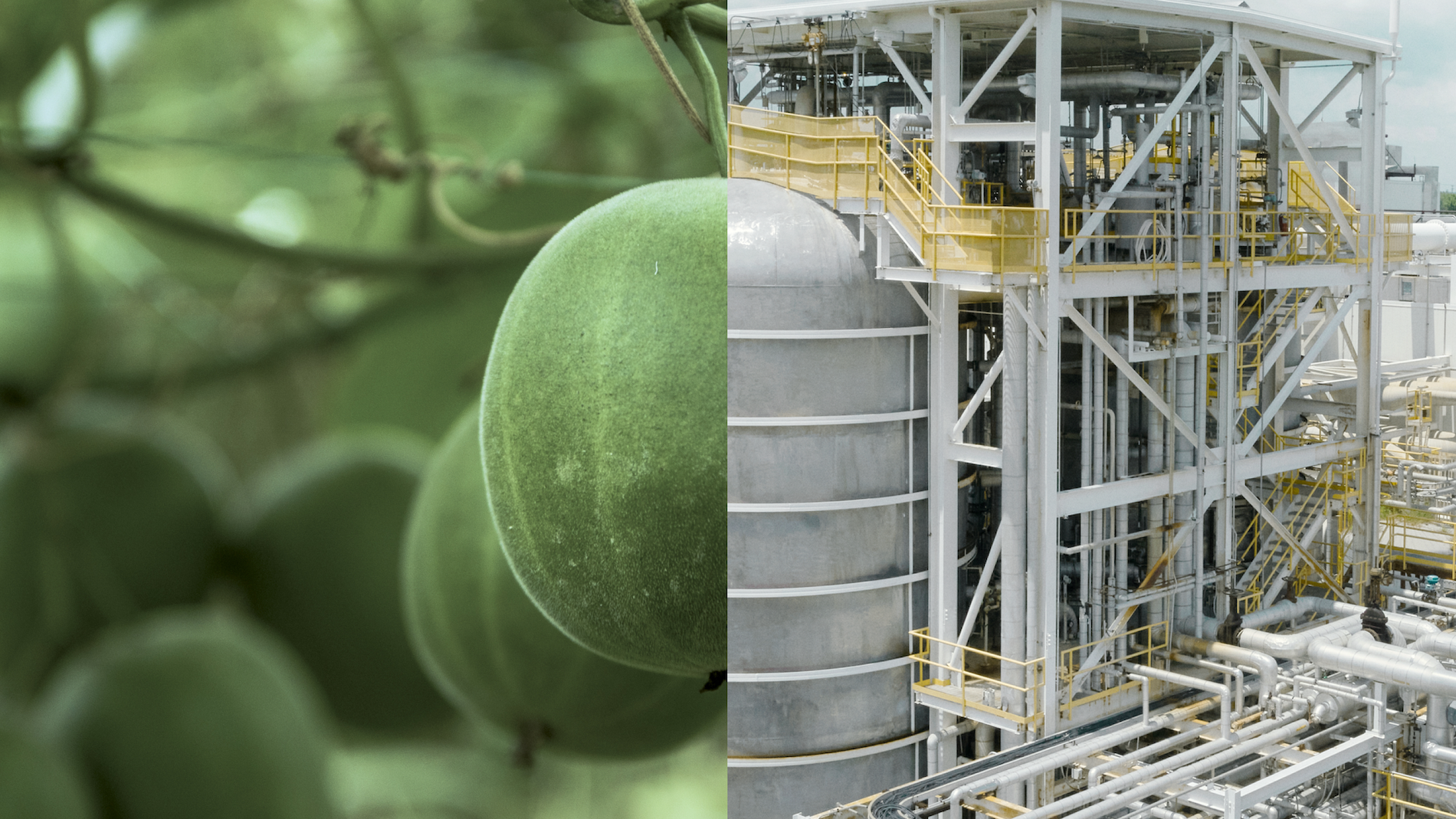
Monk fruit and fermentors at Manus' BioFacility in Augusta, Georgia
Made in America: Manus unveils the first monk fruit sweetener produced in the U.S. at commercial scale
Press Release
June 18, 2026
Media Relations Contact
Frederik Bjoerndal
Senior Vice President, Corporate Affairs and Marketing

The latest breakthrough from Manus’ bioalternatives platform brings a sweetener grown until now only in China to commercial scale in the United States – a resilient, domestic source for sugar reduction at scale
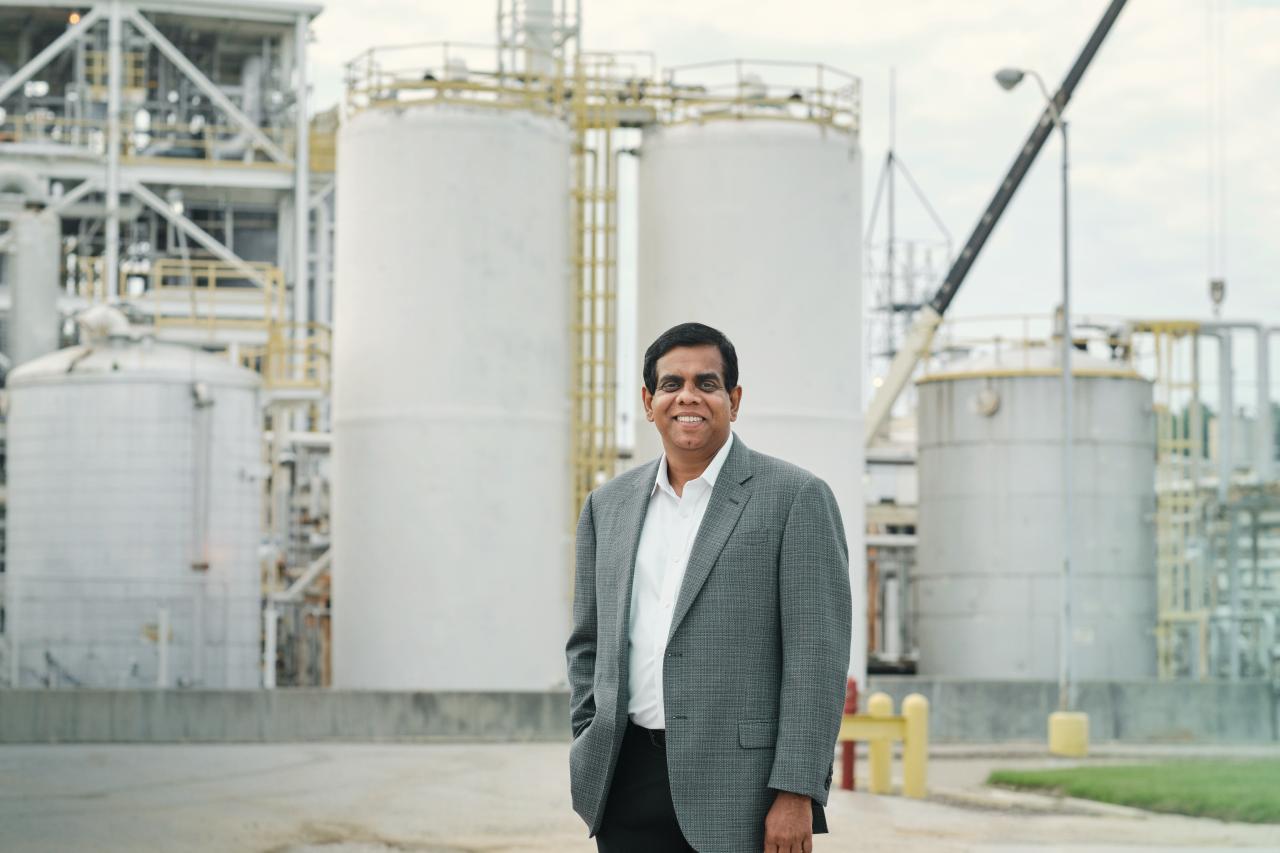
Ajikumar "Aji" Parayil.

Our large-scale BioFacility in Augusta, Georgia.
Manus, The BioAlternatives Company®, today unveiled Monk Fruit Sweetener, the first monk fruit sweetener produced in the United States at commercial scale through industrial biomanufacturing. Made by fermentation at the company’s Augusta BioFacility in Georgia, it turns a scarce, harvest-dependent ingredient – grown until now only in China – into a reliable, domestically produced source of natural, zero-calorie sweetness, and brings the clean taste of monk fruit within reach of mainstream food and beverage products for the first time.
Manus is supplying samples for formulation now, and will debut the ingredient to the industry at IFT FIRST 2026 in Chicago, July 12-15, with broader commercial availability to follow.
“For decades, the world’s monk fruit has come only from China, leaving the category dependent on a single harvest and a single supply chain,” says Ajikumar “Aji” Parayil, Founder and Chief Executive Officer of Manus. “We have changed that. By producing it in America, at commercial scale, we give the food industry a second source it can rely on – and we turn monk fruit from a niche, premium ingredient into a practical workhorse for sugar reduction. It is the latest breakthrough from a proven technology and scale-up platform for bioalternatives, reinventing how the world’s most valuable molecules are made, across sweeteners, flavors, and the building blocks of essential medicines.”
A resilient, U.S.-made alternative to single-country supply
The launch arrives as ingredient buyers weigh long-term sweetener contracts. The world’s entire supply of monk fruit is grown in a single region of southern China, Guangxi, and is subject to harvest cycles, price swings, and quality variation – concentrating a fast-growing sweetener in one country and leaving brands exposed. Manus offers a different path: a second, fully independent, U.S.-based supply route with consistent quality, predictable pricing, and proximity to end markets – offering real diversification and optionality beyond a single-country, agricultural model. Because it is produced by fermentation rather than agriculture, it also carries a far smaller environmental footprint: normalized to equivalent sweetness, lifecycle analysis indicates Manus’ Monk Fruit Sweetener uses roughly 6.7 percent of the land and water that cane sugar requires.
Manus’ Monk Fruit Sweetener is a zero-calorie, non-glycemic sweetener that is about 350 times sweeter than sugar, with an optimized mogroside profile that delivers clean, rounded sweetness and no bitter aftertaste. Its solubility and stability suit applications across ready-to-drink beverages, dairy and plant-based alternatives, baked goods and confectionery, functional and nutritional products, and food service.
Because it is biomanufactured rather than harvested, every batch has full traceability and consistent purity. The ingredient has successfully completed FEMA GRAS review (FEMA No. 5108), with an FDA GRAS Notification for broader food and beverage use in progress.
“Producing a molecule as complex as mogroside V through fermentation requires more than 30 enzymatic steps within a single cell, and we have successfully engineered and scaled that process,” says Christine Santos, Chief Technology Officer of Manus. “Using a fully water-based, solvent-free purification process, we have achieved an optimized mogroside profile that gives a clean, highly soluble sweetener with no bitter aftertaste. The result is an ingredient that is chemically identical to the mogrosides found in nature with the performance, consistency, scalability, and supply reliability that food and beverage manufacturers require.”
Proven across sweeteners, flavors, and essential medicines
Monk Fruit Sweetener is the newest product from a bioalternatives platform of extraordinary range – one that brings scarce, single-source molecules to commercial scale in the United States and makes them better, spanning everything from everyday sweeteners to the building blocks of essential medicines.
Through The Sweetener Alliance with Tate & Lyle, Manus produces all-Americas stevia Reb M, branded as Yume™ M Stevia Sweetener, at its Augusta BioFacility. In flavors, Manus and Givaudan, one of the world’s largest flavor and fragrance companies, developed and scaled BioNootkatone, a citrus bioalternative; the company’s BioIngredients portfolio also includes Valencene 80 and Nootkatone 70. And in medicine, in partnership with HHS ASPR’s Industrial Base Management and Supply Chain Office under the Defense Production Act Title III program, Manus is onshoring artemisinin and shikimic acid – the key starting materials for frontline antimalarial and antiviral medicines – in a federal-private partnership now totaling $47.4 million, with the potential to secure domestic production of more than 50 essential medicines.
Manus’ cell factories are more than 1,000 times more efficient than nature, and its Augusta BioFacility supports more than 150 skilled biomanufacturing jobs.
Manus’ Monk Fruit Sweetener complements the company’s all-Americas stevia Reb M; due to their synergistic sensory properties, the two ingredients can be combined to achieve a rounder, more sugar-like taste than either delivers alone. Manus first signaled its intent to launch domestic monk fruit sweetener production in January, in an exclusive with leading trade outlet FoodNavigator.
Explore Monk Fruit Sweetener and request a sample.
Share this article:
Featured articles



Follow the transition, up close!