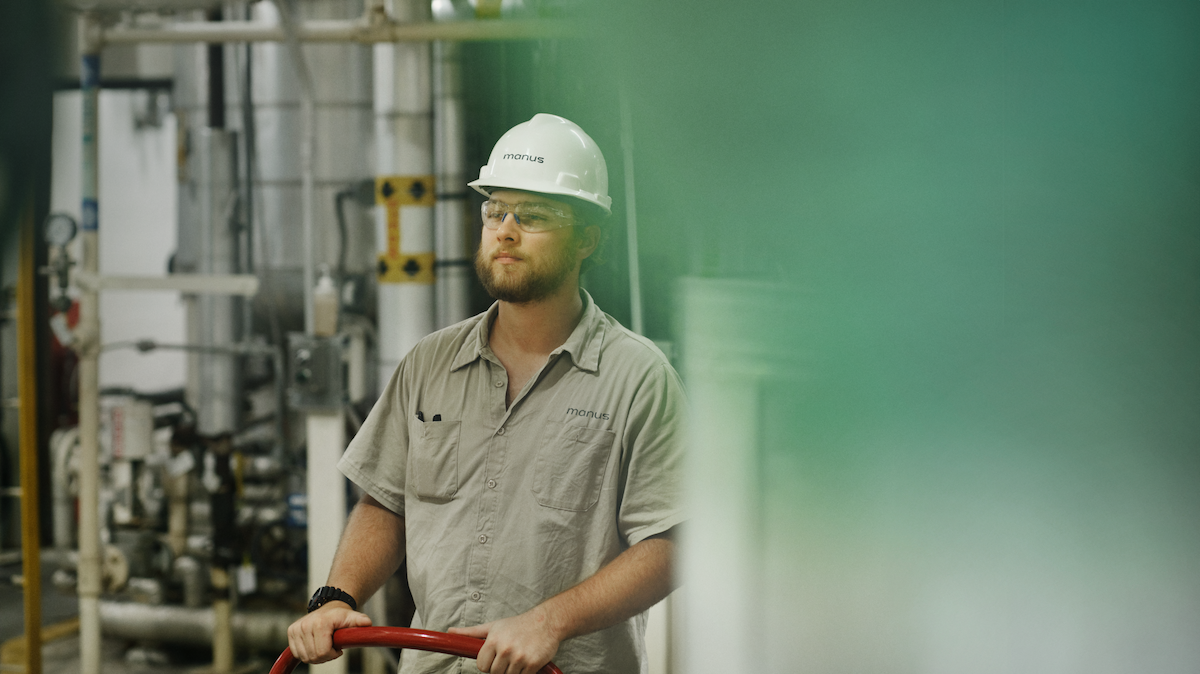
Fermentation operator in Augusta, Georgia
Manus to Congress: bringing medicines back from China starts with AI on the factory floor
Press Release
July 23, 2026
Media Relations Contact
Frederik Bjoerndal
Senior Vice President, Corporate Affairs and Marketing
Testifying at a U.S. House field hearing on AI, Founder and CEO Aji Parayil argues that deploying AI in biomanufacturing can rebuild American manufacturing jobs, help win the AI race with China, and secure domestic production of essential medicines

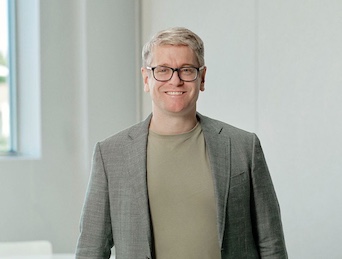
Ajikumar "Aji" Parayil.

Pilot plant manager at Manus’ large-scale BioFacility in Augusta, Ga.
Manus, The BioAlternatives Company®, today announced that Founder and Chief Executive Officer Ajikumar “Aji” Parayil is testifying Friday, July 24, before the U.S. House Committee on Education and the Workforce at a field hearing in Augusta, Georgia, titled “Building an AI-Ready America: How AI Is Creating Opportunities Across America’s Workforce.” His central message: the United States does not have to choose between rebuilding manufacturing jobs and deploying AI. In biomanufacturing, the two advance together.
“The false choice is jobs or AI,” says Parayil. “In biomanufacturing, deploying AI makes our workers more productive, lets us produce more, and lets us hire more people – right here in America. It is also how we bring the making of essential medicines back from China. We took a plant that had been written off and put people back to work with advanced technology, and we have the capacity to do far more – in partnership with the U.S. government.”
On the factory floor, AI and advanced data analytics help Manus self-calibrate its processes, minimize waste, and improve product quality. Rather than eliminating jobs, the technology makes each worker more productive and lets Manus grow output – which requires hiring more people.
Parayil will tell lawmakers that the harder constraint is workforce: the country needs more machine operators, electricians, welders, and technicians, and that community colleges, technical schools, and apprenticeships – not only advanced degrees – are the fastest way to build that pipeline.
A model for reshoring – and national security
Manus offers a working example. In 2018 it rebuilt a shuttered former NutraSweet plant in Augusta into one of the largest biomanufacturing sites in the United States, rehiring experienced local workers and employing more than 150 people today. Through a partnership with the U.S. Department of Health and Human Services’ Administration for Strategic Preparedness and Response, the company is onshoring critical pharmaceutical inputs from domestic feedstocks such as corn-derived sugars – strengthening supply chains and American agriculture alike.
“We don’t just need to invent AI – we need to deploy it, in manufacturing, biotechnology, and pharmaceuticals, to outcompete China without copying its labor model,” Parayil says. “That is how we end our dependence for the building blocks of essential medicines. The capacity exists in Augusta today to make far more, and we can help any company that wants to produce its medicines entirely in the United States.”
Parayil will also urge policymakers to lower the cost and barriers to AI adoption so small and mid-sized manufacturers can compete, and to deepen partnerships among industry, government, and educational institutions to prepare the next generation of workers.
Augusta is drawing national notice for its momentum: this week it took the top spot on LinkedIn’s 2026 Cities on the Rise, a data-backed ranking of the fastest-growing U.S. metros for jobs and talent.
The hearing is open to the public and live-streamed on the committee’s YouTube page.
Share this article:
Featured articles


Follow the transition, up close!